

A Deep Dive Into Assembly Bill 98 And The 2026 California Compliance Era
The landscape of California’s logistics and industrial sector underwent a seismic shift in late 2024 with the signing of Assembly Bill 98. Authored by Assembly members Juan Carrillo and Eloise Gómez Reyes, this landmark legislation emerged from a high-stakes compromise among labor unions, environmental justice advocates, and the logistics industry. As we move through 2026, the industry is no longer merely discussing the theoretical implications of this law; it is actively navigating the reality of its implementation. Assembly Bill 98 represents one of the most significant state-level interventions in local land-use authority in California’s history, specifically targeting the “warehouse boom” that has defined regions like the Inland Empire and the Central Valley for the last decade.
The Genesis of Assembly Bill 98: A Regulatory Compromise
For years, California’s Inland Empire—the massive logistics hub spanning Riverside and San Bernardino Counties served as the primary engine for the state’s goods movement. However, the rapid proliferation of “mega warehouses” led to mounting friction with local communities. Residents and environmental groups raised alarms over “diesel death zones,” citing the health impacts of heavy-duty truck emissions and the noise pollution associated with 24/7 operations.
Before Assembly Bill 98, warehouse standards were largely a patchwork of local municipal ordinances. Some cities enacted moratoriums on new construction, while others maintained business-friendly zoning. Assembly Bill 98 was designed to end this fragmentation by establishing statewide “floor” standards. Its primary objective is to protect “sensitive receptors,” a term that includes schools, daycare centers, parks, nursing homes, and private residences. By mandating uniform environmental and design criteria, the law aims to decouple industrial growth from community degradation.
The Core Pillars: Buffers, Routes, and Design
The operational heart of Assembly Bill 98 lies in its specific, localized requirements for new or expanded logistics facilities. The law differentiates between “warehouse concentration regions” and the rest of the state, but the general mandates follow three core pillars:
- The Buffer Zone Mandate. One of the law’s most contentious aspects is the setback requirement. For facilities exceeding 100,000 square feet, the law mandates significant separation from sensitive receptors. Depending on the specific zoning and the facility’s size, these buffers typically range from 500 to 900 feet. This isn’t just empty space; the law requires these zones to be used for noise-dampening measures. Such as solid physical barriers, landscaping, and berms. For developers, this effectively reduces the “buildable” footprint of a land parcel.
- Standardized Truck Routing Traffic congestion and the presence of heavy-duty trucks on residential streets have long been the primary complaints of local communities. Assembly Bill 98 addresses this by requiring local jurisdictions to establish and enforce official truck routes. These routes must prioritize highways and major arterials while strictly avoiding residential neighborhoods. By January 1, 2026, many of these jurisdictions were required to finalize and integrate these maps into their General Plans. This has forced logistics operators to rethink their “last-mile” delivery strategies and has placed a heavy burden on local governments to upgrade infrastructure.
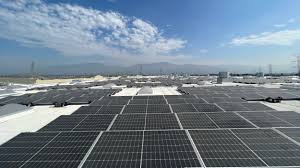
- Enhanced Operational Standards Beyond the physical footprint, Assembly Bill 98 dictates how a facility must function. This includes mandatory anti-idling signage and enforcement to prevent trucks from running their engines while waiting at loading docks. Furthermore, the law aligns with California’s broader climate goals by requiring new developments to be solar-ready and equipped with battery storage. In essence, a warehouse is no longer viewed as just a shell for goods.
The 2025 “Cleanup”: SB 415 and the Refinement of Law
Both sides of the aisle criticized the original passage of Assembly Bill 98 in late 2024. Pro-business groups argued that the language was too vague, while environmentalists felt it didn’t go far enough. This led to a period of intense legislative “cleanup” in 2025, primarily through Senate Bill 415.
SB 415 was essential in providing the technical clarity developers and city planners needed to break ground. It refined the definition of “expanded facilities,” clarified how distance should be measured from a “sensitive receptor” (i.e., from the property line or the building wall), and provided slight flexibility for facilities already deep in the entitlement process before the 2024 signing. This legislative evolution underscores a critical reality of California governance: the first draft of a major environmental law is rarely the final word.
Regional Disparities: The Inland Empire vs. The Rest of California
While Assembly Bill 98 is a statewide mandate, it is felt disproportionately in “warehouse concentration regions.” These are areas where industrial development already occupies a high percentage of the available land. In these zones, buffer and air-monitoring requirements are even more stringent.
This has created a two-tiered industrial market in California. In regions like the Inland Empire, barriers to new development have skyrocketed. Investors must now account for higher land costs per usable square foot and increased litigation risk from environmental groups using Assembly Bill 98 as a legal lever. The added expense of high-tech sustainability features. Conversely, this has pushed some development toward the edges of these zones. Potentially shifting the “logistics frontier” further into the Central Valley or even toward neighboring states like Nevada and Arizona.
The Economic Debate: Protection vs. Growth
As of 2026, the economic impact of Assembly Bill 98 remains fiercely debated. Critics of the law, including many industry trade groups, argue that these strict standards act as a “shadow tax”. They contend that by limiting the supply of warehouse space and increasing construction costs. The law inevitably drives up the price of goods for California consumers. Specifically, there is also the concern of “logistics flight,” where companies choose to bypass California ports entirely, favoring cheaper, less-regulated hubs.
On the other side, proponents argue that the “business as usual” model was unsustainable. They point to long-term savings in public health costs and to the creation of industrial jobs within environmentally responsible facilities. From their perspective, Assembly Bill 98 isn’t an industry killer; it is an industry evolver. The bill forces the logistics sector to adopt modern 21st-century standards that respect the communities they operate in.
Looking Ahead: The Post-2026 Reality
We are now living in the post-compliance era of Assembly Bill 98. The January 1, 2026, deadline has passed, and the first wave of facilities is fully entitled under these new rules. The success or failure of this legislation will be a measure of two metrics over the next five years:
- Air Quality and Public Health: Will we see a measurable decrease in particulate matter and respiratory issues in “warehouse-heavy” zip codes?
- Economic Resilience: Can California maintain its status as the nation’s premier gateway for global trade? Can they enforce the strictest land-use regulations in the country?
Finally, Assembly Bill 98 is more than just a set of building codes. It is a social contract. it reflects a world where “efficiency” is no longer the only metric for success. Today, sustainability, community health, and legislative compliance are just as critical as dock door counts and highway proximity. For the logistics professional operating in 2026, navigating these 500-foot buffers and official truck routes is no longer a choice. It is the cost of doing business in the Golden State.


