

History And Expansion Of The Cashew Economy Throughout Africa
Cashews are part of a growing business that is stabilizing and growing the economy in many countries. Africa is slowly expanding the industry and showing itself as a worthy competitor to the world’s current top cashew producers, Vietnam and India.
Cashew trees are hearty and can withstand harsh climates and less care. Brazil introduced new genotypes that were larger and more productive in the 1990s, which boosted the entire industry worldwide.
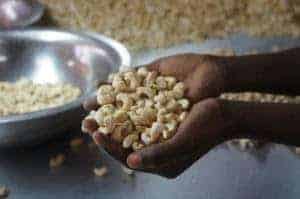
The cashew nut goes way back. Many enjoy its creamy, sweet texture in foods like butter or just plain raw. Eating a large number of cashews provides a good source of protein, iron, vitamin b-1, riboflavin, vitamin c, and minerals.
The cashew is healthy and delicious and as a crop, it is literally money growing on trees. The Portuguese traders brought the nut to Africa circa the 16th century. The tree was found growing wild throughout parts of Africa and used as a food source. The cashew nut grows in many places around the world because it is a prolific and hearty tree that can withstand many harsh climates. The climate and conditions in Africa are particularly accommodating to the cashew tree, so naturally African cashews are considered the highest quality cashews in the world today.
Demand For African Cashews Worldwide
The cashew nut is a rising star cash crop in Africa. For the last 50 years, it has slowly transformed the state of the economy in those places which grow it as a crop to sell worldwide. The real demand for Africa’s cashews began because of India, the world’s 3rd leading cashew producer. The cashew economy throughout Africa is third place behind the leader India and Vietnam. Africa is beginning to consume even more cashews to supplement its own growing population.
Ghana has experienced steady growth from the cashew industry and has created many new jobs as well as offered a stable boost to the country’s economy. Because of Ghana’s central position among the many ports along the coast, they have become a central hub for the cashew industry exporting for Cote D’Ivoire (Ivory Coast) and Burkina Faso.
Keeping with the cashew pace up the northwestern coastline of Africa is the country of Guinea Bissau. Cashew production is depended upon for the stability of 85% of the country’s population. Unfortunately, Guinea Bissau is also facing deforestation problems as the country continues to try and meet the demand of the growing cashew industry. For Guinea Bissau, we see how bittersweet such success can be.
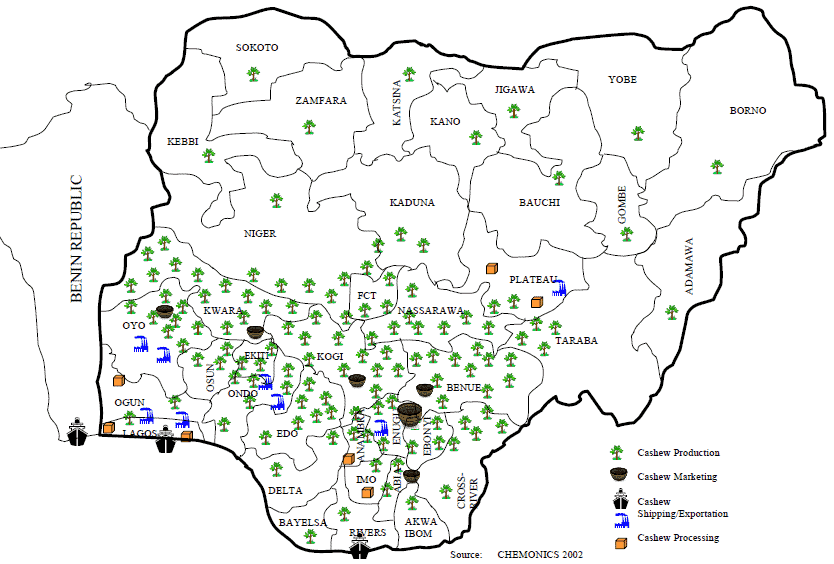
Nigeria Leading The Cashew Economy Throughout Africa
Of the countries that have farming in Africa, Nigeria is second worldwide in cashew nut production. The production and exportation of cashews spread across twenty-seven states in the country with other crops grown there as well. You can also find healthy palm oil, cocoa, and rubber industries across the country. The main crop of Nigeria now is definitely cashews.
It is important to note that the ecology of these 27 states remains key to the success of cashew crop production. The fickle cashew tree will only grow and flourish in woodland-tall-grass savanna and rainforest. We find most recent economic information puts Nigeria as the second leading world producer of cashew nuts.
Interesting that cashews grown in Nigeria are considered organic. When the criteria of organic certification standards are not met, those cashews cannot carry the organic label. This adds to both the quality and value of the Nigerian cashew. Even though many consider them the cheapest (less costly) and best tasting in the world.
How The Cashew Nut and Tree Grows
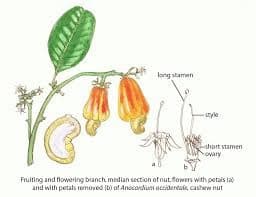
The Cashew nut comes from a tree that bears a woody, pulpy fake fruit about the size of an apple. In fact, farmers call the fruit “cashew apples” and they go through a range of color transformations as the apple matures. The cashew apple seems to change from green to yellow to orange. Finally, to a light apple-red color when it is ripe. Many places use fruit to make cheap wine which is a local drink in many growing regions.
The cashew tree is also known as the Anacardium Occidentale and is actually an evergreen tree. The seed of the cashew is the “nut” and develops at the bottom of the cashew apple. When looking at the fruit, you will see the cashew-shaped casing (this is actually the fruit of the tree). The cashew seed is located at the bottom of the fruit. Pretty pink and white flowers bloom on the tree and smell wonderful. The tree grows quite tall, ranging from around 20-40 feet high. If you haven’t figured it out yet, you can now tell that it is inaccurate to call the cashew a nut because it is actually a seed of the tree’s fruit.
What Africa Needs For The Cashew Plant To Grow
The cashew’s only real main growing requirements are at least six hours of full sun a day and a soil ph of 5 to 6.5. The tree can take some cold weather, but not too much below freezing for too long. Beware of the leaves and other parts of the tree as it is related to poison ivy and poison sumac. Specifically, causing some serious skin irritation if you have sensitive skin. The seed casing and fruit are also caustic so proper equipment must be used in processing and handling.
Explorers in the Amazon did not discover cashews because they are truly, poisonous on the outside. In most cases, commercial crop cashew processing means the fire is needed to extract the fruit from within. The processors use fire to separate the fruit from the cashew seed.
The Future Of Growing Cashews In Africa
The warm, sunny climate in which cashew trees thrive make a perfect growing environment within countries like Brazil, India, Vietnam, and Nigeria. These countries continue to be leading producers and processors of cashews worldwide. The cashew economy throughout Africa continues to expand steadily as cashew production continues to increase. Africa makes a great place for expanding the cashew growing industry overall. In the future, Africa may soon become the leader of the cashew production for the world.


