

A Profile Of The American Hazelnut Company
The American Hazelnut Company began in 2014 at the Kickapoo Culinary Center in Gays Mills, WI. They are a grower-owned processor and marketer of hazelnut products. The company is a consortium of 16 grower-owners. Each farmer works together to provide customers with quality hazelnuts with a superb flavor. They grow hazelnuts on farms in the Upper Midwest that traditionally grew nothing but corn and soybeans.

The tradition of growing hazelnuts brings diversity and brings back a crop that once thrived in the Upper Midwest. They currently buy in-shell hazelnuts from grower members and process them into a range of products. These include raw whole kernels, cold-pressed unfiltered oil, and hazelnut meal.
Customers are becoming more focused on quality oils. These oils are now made from a variety of nuts, including hazelnuts. Doctors and Nutritionists consider this oil to be much healthier when cold-pressed. Heating oil during production can reduce its flavor, aroma, and nutritional content.
Consumer Awareness
Consumer awareness is a challenge for hazelnut products in America. Customers are drawn to these Wisconsin nuts and oils for two main reasons.
First, Wisconsin is local. Today, customers spend more time hunting for locally grown foods close to home. Second, hazelnuts are a wonderful alternative to other nuts that may cause health issues. The number of Americans allergic to peanuts has also increased.
Overall, worldwide consumers have found allergies to specific nuts that are more common in everyday dishes. Some customers seeking hazelnut products are allergic to more common nuts, including almonds, walnuts, and pine nuts.
In a broader context, Turkey is the world’s largest hazelnut grower. They grow 95% of the world’s hazelnuts. Turkey is to hazelnuts as America is to almonds. Currently, Americans do not have a high demand for hazelnuts or hazelnut spread products. Hazelnut oils also have a very limited following.
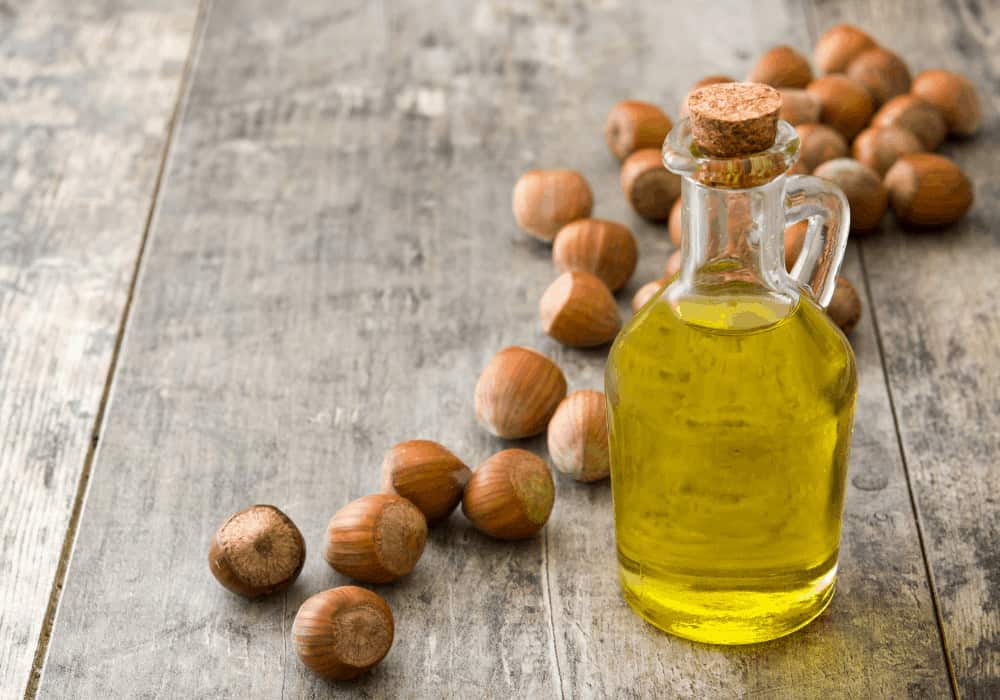
Recent surveys in America show that customers are becoming more interested in hazelnut and their’ health benefits.
A reason for this growth is likely because hazelnuts run lower in price than spreads made from more expensive nuts. Consequently, this contributes to the boost in the popularity of Hazelnut based milk alternatives.
The hazelnut oil that The American Hazelnut Company manufactures and sells has the steepest hill to climb. Gaining consumer awareness is a very unique challenge. Certainly, there are well-known oils that will continue to be a top choice for supermarket consumers. Olive and vegetable oil are at the forefront. Peanut and almond oil also have big brands and budgets behind them.
Nutella: The King Of Hazelnut Branding
No conversation about the hazelnut would be complete without referencing the grip that Nutella, and its parent company Ferrero, has on the hazelnut spread market. Since the late 1940s, Nutella has outgrown Italian hazelnut production. It has grown to the point where Nutella is the largest user of hazelnuts grown in Turkey.

So, how do you get Americans to love hazelnuts as much as people worldwide do? Establishing a product takes investment, time, and an understanding of marketplace needs. Nut oil sales are one of the fastest-growing segments in supermarket sales. Customers who switch from traditional oils to nut oils should be educated about hazelnuts.
China… Again
China is the American Hazelnut Company’s number one customer outside America. The NY Times reports that China is the number one importer of all nuts grown in America. More than just nuts, they are the number one customer for all food growers across America.
Wikipedia List Of Top Hazelnut Producing Countries:
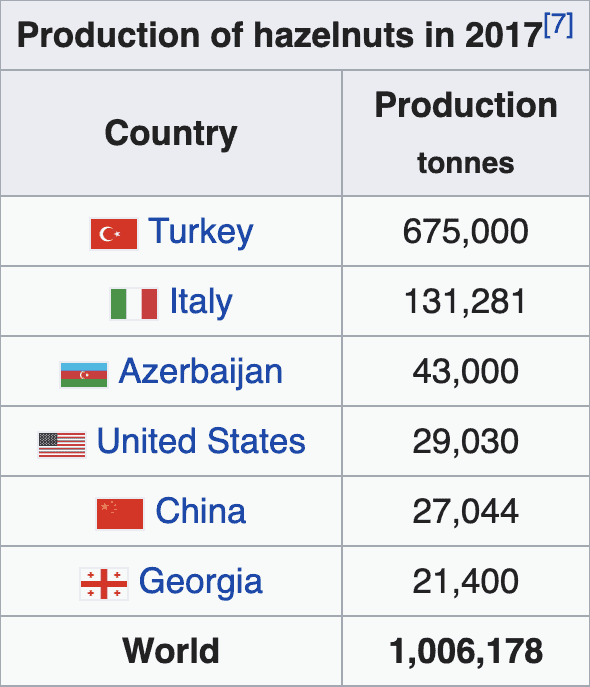
Because Turkey is by far the number one producer, a unique set of circumstances has emerged. Most of the hazelnuts that Americans consume come from Turkey. Most of the hazelnuts that America grows get exported to China. The reason is simple;
Americans focus more on saving money than on getting a higher-quality product. “How can I get something cheaper, as opposed to something better?”
The Chinese import hazelnuts from Oregon because they’re much higher quality than what they get from Turkey. Most of what they import is for the Chinese New Year. It’s part of their celebration and traditions, and for that holiday, they want a higher-quality nut. The hazelnuts imported from Oregon to China are larger and higher quality than the ones we import from Turkey.
Michael Lijia (The Hazelnut Company) hypothesizes that Nutella uses a higher-quality hazelnut for its famous spread. Ferrero uses a very small amount of actual Italian hazelnuts today. Although Ferrero’s headquarters are in Italy, it sources from many places, with most coming from Turkey. What we see in America are leftovers from Turkish farming and are lower-cost in production.
What will The American Hazelnut Company do next?
That depends entirely on which product sells more. The American Hazelnut Company will develop a product the marketplace wants. A product or product that can expand on its current resources without having to spend a ton of money.
There have definitely been discussions of producing a Nutella-like product. However, launching a product similar to Nutella raises major issues in development, design, and marketing. The company is pressing pause on the spread market in order to focus on the oil and flour markets. This is largely due to start-up costs.
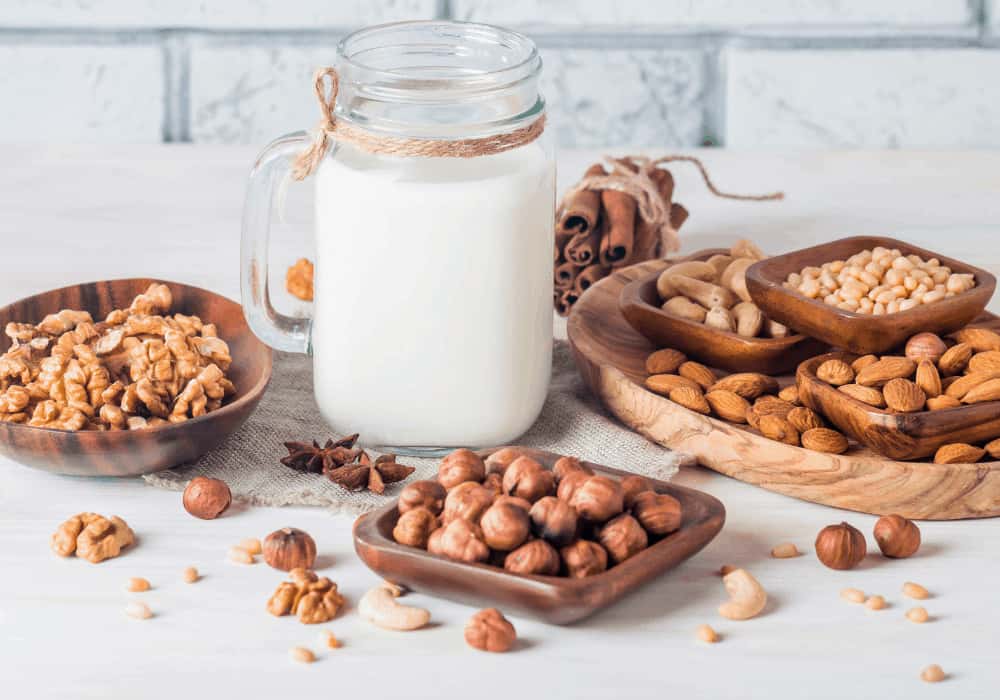
The Creation of an American Hazelnut Milk Brand
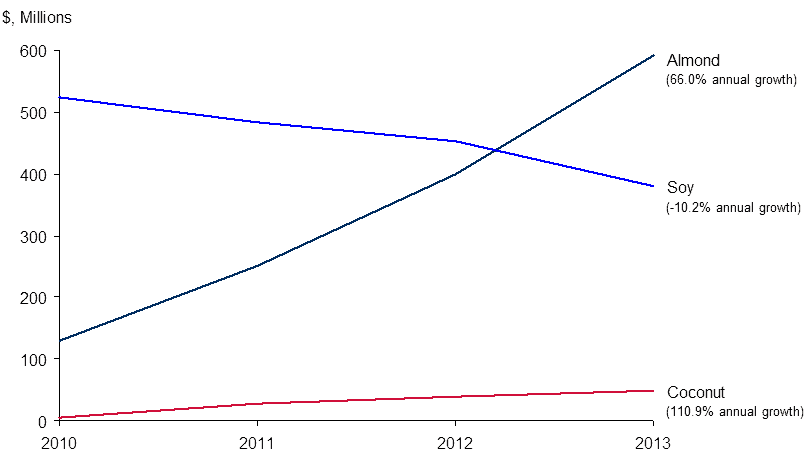
Hazelnut milk tops the new product wish list. In 2019, alternative milks gained market share, with almond milk posting double-digit growth for years. A trip to the supermarket clearly displays the rise of cashew, coconut, and oat milk. Thus, a similar trend is forecast for hazelnut milk.
Jason Fischbach is a Process Developer from the University of Wisconsin Extension. Recently, he’s been using the community kitchen in their college for the primary processing of hazelnut milk. Taking the kernel out of the shell is the primary processing.
At a university product-development contest, they created hazelnut milk. They likely used whole, possibly roasted hazelnuts. Jason Fischbach didn’t share the exact recipe. They used a little bit of honey because people tend to like sweets. He said that it was pretty good.
U.S. Retail Sales Of Milk Substitutes
Leading Milk Alternative Products w/Compound Annual Growth Rates)
The American Hazelnut Company aims to source enough high-quality hazelnuts to make something like milk. Another problem with hazelnut milk is that you grind it into a fine powder.
Alternatively, when making hazelnut milk, you end up with large hazelnut chunks. They soak in the water, and the flavors infuse into the fluid. But the issue is finding a use for the rest. The goal is to use this industrial byproduct, sell it to others, and find a marketplace that uses it. Even one in animal feed.
It’s surprising that the oil doesn’t sell as well as it should in the marketplace. The flavor is certainly different from other oils. For instance, hazelnut oil isn’t always a replacement for olive oil.
One customer wanted to make hummus out of hazelnut oil. She was curious, as were we, so we provided the oil. The goal was simply to grab feedback on the experiment. This proved that hazelnut oil simply was not a good fit. You have a certain flavor expectation for your chickpeas, and only olive oil can deliver it.
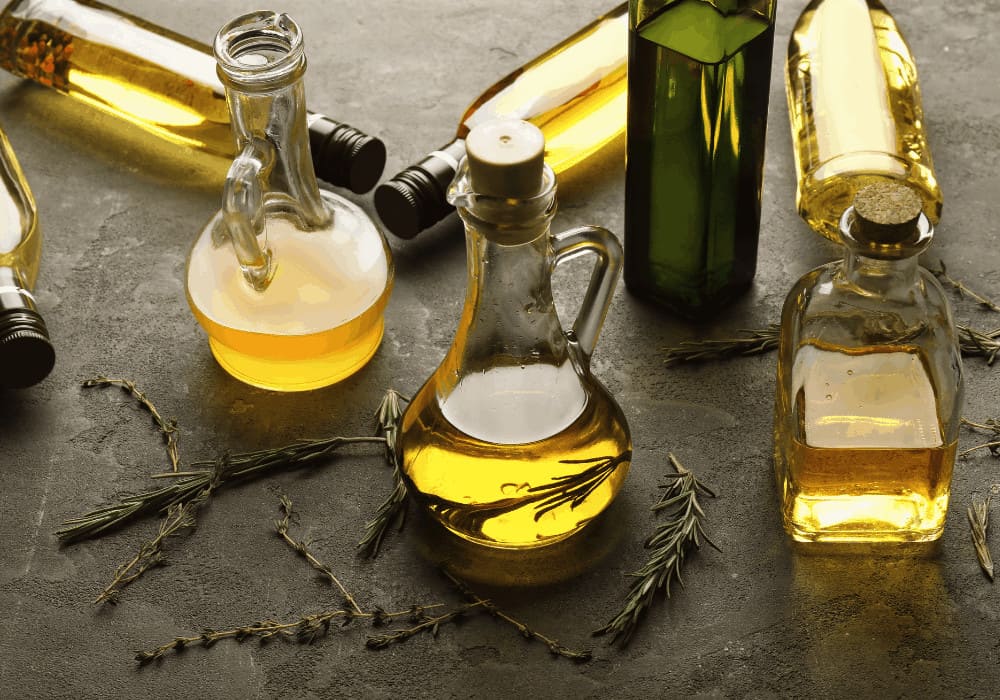
The Cold-Pressed Process for Hazelnuts and Recycling
In a nutshell, “cold-pressed” means you’re not adding any additional heat beyond what is necessary to process. Because of this process, the friction from the machine’s force creates enough heat to break down the cell walls. Consequently, it releases the oil.
We also add a little heat to help the oil flow. The oil drips out of the bottom of the press, and these little bits come with it. The oil settles without being filtered. We decant it off the top for the premium hazelnut oil. So, the excess material settles to the bottom. The leftover industrial product is large hazelnut grinds mixed with some oil.
One woman says she created a cookie recipe that works great for that. Now, can we develop a cookie recipe using this? We also have other products in mind for our raw hazelnut material recycling.
A Message for Those With a Nut Allergy
Most “nut allergies” are peanut allergies. Many people are also allergic to tree nuts. There’s often confusion between peanuts and tree nuts. Peanuts are legumes, not nuts; still, studies by the National Center for Biotechnology found that 25% to 40% of people allergic to peanuts also react to at least one tree nut.
Taken From An Interview with Michael Lijia, The American Hazelnut Company.


