

What Exactly is a Nut?
What is a Nut?
Inside the Merriam-Webster Dictionary, we can find the technical and fundamental definitions:
- A hard-shelled dry fruit or seed with a detachable rind, shell, and interior kernel.
- The kernel of a nut.
In a more mainstream version, they are often defined as the dry, one-seeded fruit from various trees or bushes. It is edible but may require cooking to get there in some cases. They also come in a shell, usually stiff, woody, rigid, or leathery. The kernel in the middle of these shells is called the ‘meat’.
What is Not a Nut?
Perhaps more importantly, what is not a nut? Strictly speaking, a peanut is not a nut. Nor are water chestnuts, coconuts, or pine nuts. Just because it has the word “nut” within its name does not make it accurate.
So what’s the common denominator?
All of these items have shells that enclose an edible and tasty substance. The peanut, sunflower seed, water chestnut, coconut, and pine nut are seeds or have a hard surface. However, not one of these foods has both of them. They are called nuts because they are hard-shelled fruit that will stay fresh for a long time without decaying. But that does not make them a nut. Some have argued that soybean should be called ‘soy nuts’. Admittedly, the soybean tastes good when dried, toasted, and salted. Since soy grows in a pod, like a pea, it will be considered legumes.
Definition
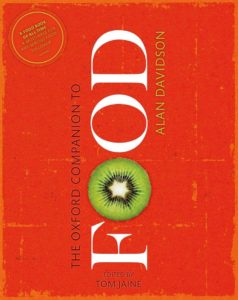
In the best-selling book, The Oxford Companion To Food, Alan Davidson writes, “They are impossible to define in a manner which would be compatible with popular usage yet acceptable to Botanists. In this book, popular usage is preferred. So, the groundnut (a legume, also called peanut) and the chufa nut (a tuber) are allowed to shelter under the umbrella word”. Furthermore, he points out that in some languages, there isn’t an umbrella word at all.
No matter what labeling rules you choose to follow, one thing that’s for sure is that nuts are nutritious, delicious, and a great addition to most diets.


