

History Of Apples | Origin, Development, Species, And Utilization
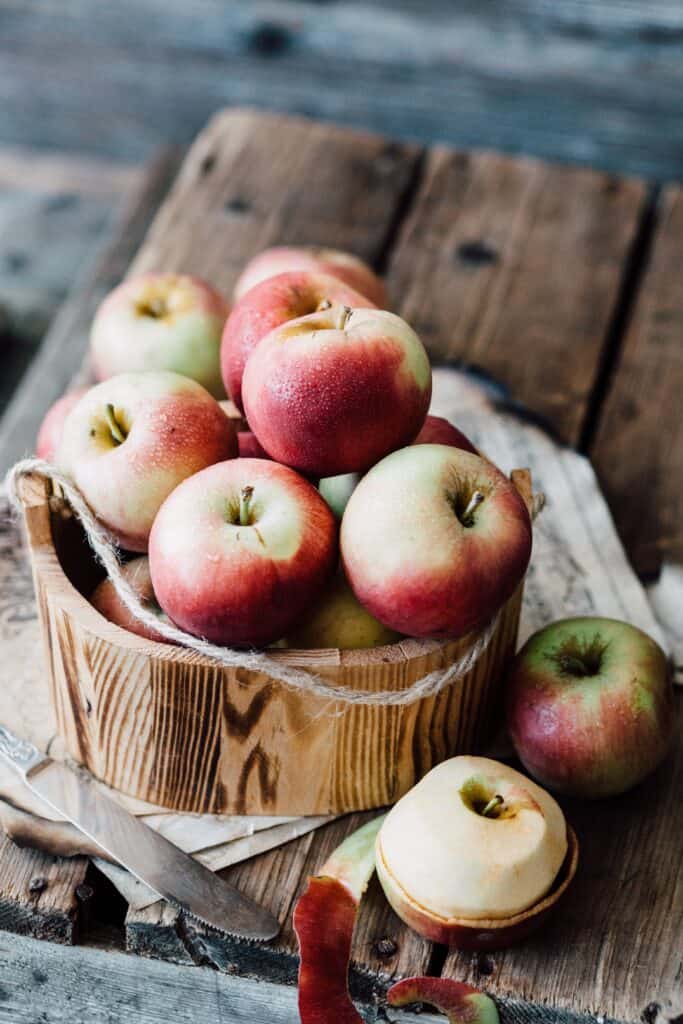
Picking apples on a clear, crisp, sunny autumn day provides a cornucopia of pleasures. The enjoyment of being outdoors and savoring another harvest has been part of the human experience for centuries. Biting into a crunchy, sweetly flavored apple or quaffing a big glass of fresh cider reminds one why apples are a part of fairy tales and folk history. Remember Snow White and Johnny Appleseed?
Apples have sustained humans with beverages-hard and sweet cider-innumerable culinary dishes, winter provisions, and even foodstuffs for hogs and cattle, and they are still an integral part of American culture and commerce. Apple pie is the quintessential American dessert, and bins of fresh apples are present year-round in every supermarket. An apple variety exists for every taste bud, and eating apples has a lot of health benefits, too. They are a good source of antioxidants and fiber, and an individual apple contains about 80 calories, 5 grams of fiber, 6 milligrams of vitamin C, and 170 milligrams of potassium.
Origin Of Apples
Botanists theorize that apples originated somewhere in central and southern China. This area is home to around twenty Malus species, whose seeds were gradually spread by birds throughout the Northern Hemisphere. Ornamental crab apples are also descendants of these smaller, bitter-fruited species. It was thought that the edible apple (Malus domestica) evolved as a complex hybrid of several of these wild apple species. However, Barrie Juniper, an emeritus fellow in the Department of Plant Sciences at Oxford University, has suggested that a small population of a single Malus species from the wild forests of the Tian Shan (the Heavenly Mountains) along the border of western China and Kazakhstan is the progenitor of all modern apple cultivars.
These Tian Shan forests became isolated by biological and climatic changes about 4.5 million years ago and evolved in isolation. Just niper theorizes that as bears and wild pigs, horses, and donkeys gradually began to occupy the area and to eat the most significant and sweetest fruits, they aided in the process of natural selection for more extensive, more precious fruit. Because apples do not breed “true to type” from seed, these wild plantings from dispersed sources gradually contributed to a diversity of apple varieties from this one species. Later, around ten thousand years ago, humans began to travel through the area, eat these fruits, and carry them westward. Juniper and other researchers are studying the remnants of these forests of wild fruit trees and are collecting samples for DNA analysis. These wild fruit trees are a fruit breeder’s paradise for genetic material.
Ancient History Of Apples
By 2500 BCE, apples were cultivated throughout northern Mesopotamia and Persia. The walled gardens of Persia included fruit trees for their ornamental beauty and culinary delights. The ancient Greeks and Romans also developed apple orchards, and their wealthy citizens enjoyed apples as part of the dessert course at banquets. The Greeks, well-advanced in horticultural knowledge, understood grafting and propagated specific varieties for their orchards. The Greek writer Theo-phrastos knew that apples would not grow true to type from seeds, writing, “Seedlings of apples produce an inferior kind which is acid instead of sweet, and this is why men graft.”
In the first century CE, the Roman writer Pliny described over twenty named varieties in his Natural History. Apple orchards were established throughout continental Europe and in Britain as the Romans extended their empire, culture, and crops. An indicator of the apple’s importance in these ancient cultures is its prevalence in Greek and Roman mythology. The Roman goddess Pomona tended her orchards and bestowed gifts of fruit on her favorites as rewards for favorable acts.
After the collapse of the Roman Empire, many of the day’s favorite dessert apple varieties disappeared. Charlemagne’s rise to power in 771 brought a measure of peace and prosperity, as well as increased interest in horticultural pursuits. His Capitulare de Villis (Rules of Land Use) decreed that every city should include apples, cherries, plums, peaches, and pears. Apple cultivation and varietal development progressed in Europe during the Renaissance. They selected varieties, named them, propagated them, and increased orchard plantings. They would then choose only the improved varieties for beautiful displays at Renaissance banquets. Individuals would enjoy fresh apples as part of the dessert course.
North American History
Apples have been part of American life from the first arrival of European settlers. One of the first documented orchards in the New World belonged to William Blax-stone, a well-known planted-orchard horticulturalist and clergyman. He, around 1625, on the slope of what became Beacon Hill, planted an orchard. Blackstone, who was eccentric, saddle-trained a bull and distributed apples to his friends on his rides. One of his apples, Sweet Rhode, first named variety Island Greening, is probably from the United States.
Colonial America. One- to six-acre apple orchards were an important part of farmsteads in seventeenth- and eighteenth-century America. Apples were grown primarily for hard cider, the beverage of choice because water was considered unsafe. Everyone in the family drank cider, and each family produced twenty to fifty barrels of cider each autumn for its own consumption and to use as barter for needed goods and services. Cider was not considered prime until it had aged over a year. Applejack, made from distilled cider, was even stronger.
Construction Of Mills And Further Growth
Around 1745, construction began for the first cider mills. Prior to this, cider was made by pounding apples in a trough and draining the pomace. By the late eighteenth century, cider mills dotted the countryside. In New England, one in ten farms had a cider mill. Colonial America used cider in cooking apple butter. They combined peeled and boiled apples and cooked them until the mixture was a thick paste.
They would then put it up in jars for later use. The colonists would use leftover cider to make vinegar and preserve food. They would also dry the apples for winter preservation. Michel Crèvecoeur, author of Letters from an American Farmer (1782), described drying apple slices on wooden platforms erected on poles. The Pennsylvania Dutch German settlers in eastern Pennsylvania were prodigious apple growers and developed a brisk business in colonial America selling schnitz, apple butter, and cider.
History Of Apples After The Revolution
After the Revolution, grafting and nurseries became more commonplace. Still, until the mid-nineteenth century, most plantings in home orchards consisted of unpruned seedling trees. The fruit was primarily used for cider and fed to hogs. Pork was cheap, and the abundant apples and peaches were an inexpensive way to fatten pigs. Political campaigns would even use cider. During one election, George Washington’s agent dispensed 3.75 gallons of beer, wine, cider, or rum to every voter. In modern times, politicians have handed out snack packs containing apple rings while on campaigns.
Insect pests and diseases were not quite as prevalent in colonial times as they later became. Some key fruit pests had not yet made the trip to the New World, and other native insects had not yet discovered apples. Pest-damaged fruit was also accepted as natural and unavoidable. Still-life paintings of fruit from this and earlier eras clearly show insect and disease damage. In 1806, Bernard McMahon, in The American Gardener’s Calendar, instructed readers to pick the worst of the leaves off the tree and dash the branches with water in dry weather to prevent insect damage from spreading.
Johnny Appleseed, whose real name was John Chapman, was a popular folk character in early nineteenth-century America. Born in Leominster, Massachusetts, in 1774, Johnny Appleseed started seedling apple tree nurseries throughout Pennsylvania, Ohio, and Indiana. Traveling by canoe or on foot, he gave apple seeds from cider mills to any farmer who promised to plant them and take care of them. On his travels, he also planted seedling nurseries in clearings. At his death in 1847, he had established apple trees over 100,000 square miles of territory.
Apple History In American Industrialization
Nineteenth-century apple growing. European settlers began agricultural settlement in the Midwestern and Western states in the mid-1820s. Home orchards were planted in Washington State by the first European immigrants from the eastern states in the mid-1800s. Commercial orchard plantings did not take hold until the
advent of the big irrigation projects in the late nineteenth century. By 1850, five hundred named varieties were cultivated. The seedling nurseries started by Johnny Appleseed and settlers across the country were the origin of unique American varieties such as Baldwin, Esopus, Spitzenburg, Green Newton, Jonathan, Hawley, Newton Spitzenburg, Swaar, Winesap, and York Imperial.
The mid-nineteenth century saw changes in American agriculture as urban populations grew and a smaller percentage of people were involved in agriculture. Apple growing was no longer primarily the purview of the self-sufficient homestead. Alcoholic cider fell into disrepute with the spread of the temperance movement, and the cider industry declined. Americans established larger commercial orchards for growing and selling. The apple industry was affected between 1880 and 1930 by the development of the refrigerated railroad car that allowed fruit growers in the western states to ship fruit east.
The development of refrigerated storage between 1910 and 1920 meant that long-keeping winter apples were less necessary, so fewer varieties were grown by commercial orchards. At the beginning of the twentieth century, seven thousand named varieties of apples existed, but five thousand of these varieties were extinct by the beginning of the twenty-first century. Prior to refrigerated storage, apple cultivars grown in small orchards ranged from early-season baking apples to winter-keeper types with thick, waxy skins that stored well in root cellars.
Pest Management In The History Of Apples
Pesticides were not developed or widely used until the late nineteenth century, when growers began producing fruit more for market and for fresh eating rather than for cider and for home consumption. Orchardists experienced increasing pest damage from codling moth, a larval fruit pest accidentally introduced from Europe by early settlers, as well as from other pests and diseases. The first arsenical insecticide, Paris green (copper acetoarsenite). was developed in the 1870s to control codling moth. Lead arsenate was developed as an insecticide in 1892. Growers also began using nicotine sulfate to fortify the lead arsenate applications. By 1945, orchardists were using up to seven applications of lead arsenate each season.
DDT, developed during World War II, was hailed for its effectiveness against insect pests and low toxicity to humans. Not until later did scientists discover that DDT persisted in the food chain. Still, these new pest controls were not without concerns. DDT successfully controlled codling moth but wiped out natural predators that kept other pests in check. They found that pest control greatly increased as the number of pesticides increased. If not handled correctly, this could have negatively impacted the history of apples.
Public debate over pesticide use grew as pesticide use increased. In 1937, the US Congress directed the US Public Health Service to investigate the possible harmful effects of spray residues on fruits and vegetables. Although the Service’s report, finished in 1940, concluded that harmful effects were minimal, the dialogue about pesticide use continued, reflected in various scientific studies and public debates through the decades. The 1962 publication of Silent Spring by Rachel Carson galvanized public opinion about the environmental consequences of pesticide use.
Apple Orchards In The Twenty-First Century
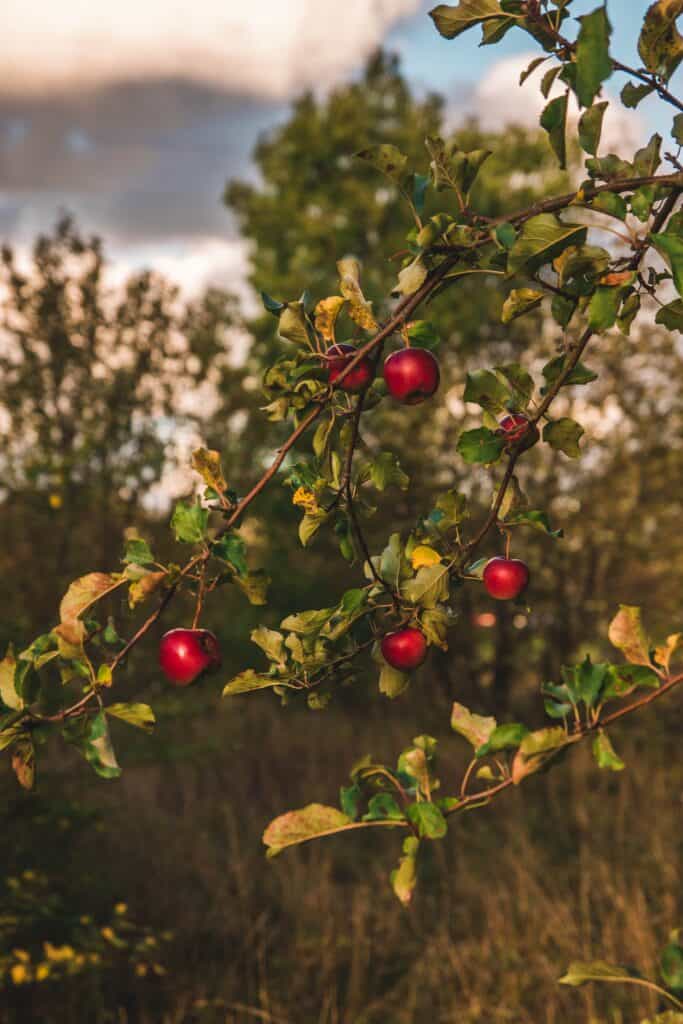
The introduction of integrated pest management in the 1970s placed more emphasis on understanding pest and disease life cycles and pest populations as the basis for pesticide applications instead of touting the benefits of applying sprays on a routine basis. Still, fruit growers must meet the demand for inexpensive, blemish-free fruit in a competitive marketplace. Pesticide use on apples remains higher than on most other crops. Researchers continue to study pest- and disease-monitoring techniques, biological controls, and new targeted pesticides to develop more ecologically based production systems and to lower the pesticide risk for agricultural workers and consumers. Consumer demand for organic fruits and vegetables produced without synthetic pesticides and fertilizers has increased. Organic apple production is growing, particularly in the Northwest, which has fewer insects and diseases than the Northeast.
In the early twenty-first century, Washington State produced 50 percent of the apple crop in the United States, followed by New York, California, Michigan, and Pennsylvania. There are over two thousand varieties of apples are grown in the United States. Commercial orchards produce about 90 percent of the crop from ten varieties of apples: Red Delicious, Golden Delicious, Granny Smith, Rome, Fuji, McIntosh, Gala, Jonathan, Idared, and Empire. In-fruit. Annual world apple production stands at approximately fifty-seven metric tons of apples. China is now the world’s largest producer of apples, followed by the United States, Poland, Argentina, and India. Horticultural Requirements Commercial apple orchards require skilled management.
Apple Adaptability In Orchards
Apples are adaptable but grow best in cool temperate climates from about 35 to 50 degrees latitude. Most apple varieties require full sun, good soil drainage, and a chilling period of 1,000 to 1,600 hours at temperatures below 45°F, along with 120 to 180 frost-free days, to produce a crop.
Fruit quality is highest when day temperatures are warm but nights are cool. Growers must also pay attention to market demands and price fluctuations to maintain viable businesses in a highly competitive international arena.
One option for smaller family farm operations is to focus on direct marketing to the consumer. Roadside marketing, farm markets, and pick-your-own operations can emphasize locally grown, unique apple varieties. Large-scale supermarkets tend to carry only a few varieties, while the several thousand apple varieties once grown in the United States are unknown to many consumers. Apple aficionados can search out regional favorites like Smoke-house, a fine, old Delaware and Pennsylvania apple from 1837; Grime Golden, the rich, distinctive apple from the mountains of West Virginia; or Blue Permain, a large, dark purplish-red fruit that will keep all winter in a root cellar. The best baking apples are found at farmers’ markets. The tart Lodi ripens early in the season, Fallawater is an old favorite for both baking and eating, and the yellow-fleshed Smokehouse is juicy and firm for pies.
The Rich Heritage Of Apples
Preserving the rich heritage and genetic diversity of these varieties is a concern of the Seed Savers Exchange. They devote time to saving heirloom varieties of vegetables and fruits as a nonprofit organization. The organization maintains a historic orchard of seven hundred apple varieties at its Heritage Farm in Decorah, Iowa. They aim to obtain cuttings of all existing nineteenth-century apples.
The US Department of Agriculture also maintains an apple germplasm collection of more than 3,000 varieties in orchard plantings or in tissue-culture storage. These collections offer genetic characteristics, such as insect and disease resistance, flavor, fruit size, and cold hardiness. They are important in breeding new apple cultivars.
Home Gardening
Backyard apple-growing enthusiasts know that, while apple-growing does take an investment of time and knowledge, it really is not difficult. Some homework will determine the varieties and size-controlling rootstocks that thrive in an area. Local agricultural extension agents are good sources of information on which pests and diseases might pose problems. The North American Fruit Explorers (NAFEX) is a network of fruit-growing enthusiasts. They publish a quarterly journal of helpful, varietal, and growing information. Disease-resistant varieties, such as Liberty, Redfree, Gold Rush, and William’s Pride, are an absolute boon for backyard orchardists. This shows the rich history of apples.


