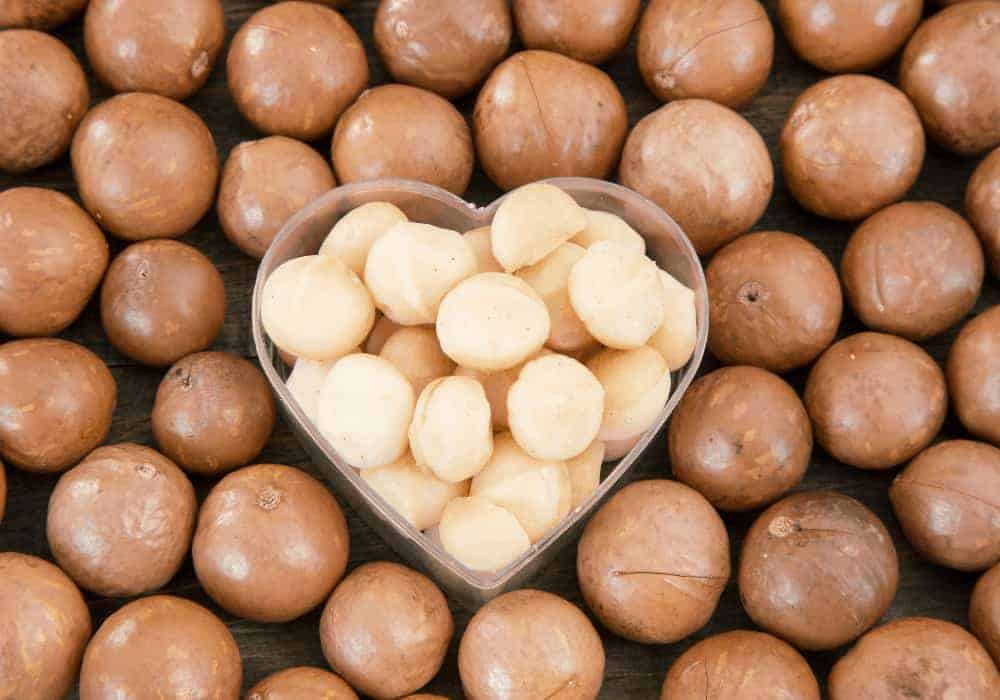
The History of the Macadamia Nut
The rich and highly nutritious Macadamia Nut originates from northeast Australia. Macadamia trees once grew around a mountain in modern-day Queensland, Australia. Let it be known that Australia’s First Nations Peoples have lived here for about 65,000 years and ate nuts from various species of plants that we now call macadamias. Indigenous Australians were the first to eat, use, and trade macadamias. The German explorer Ludwig Leichhardt was the first recorded non-Aboriginal to come across macadamias in the bush and collect them. In 1843, Ludwig Leichhardt was the first European to collect macadamia plant specimens.
Although the Macadamia Nut comes from Australia, William Herbert Purvis brought the nut to Hawaii in 1882, and it gained popularity. A decade later, the brothers behind the company, Jordan and Purvis Trees, planted seeds near their home. However, it wasn’t until 1921 that Macadamia Nuts were finally produced commercially.
Naming the Macadamia Nut
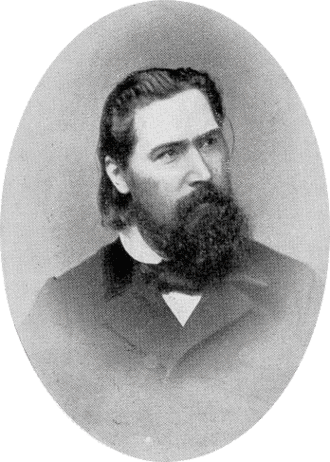
Walter Hill and the German Botanist Baron Ferdinand von Mueller were embarking on a botanical adventure. Baron Ferdinand von Mueller was referred to as “the father of Australian botany” and the “Royal Botanist”. He also ran Melbourne’s beautiful botanical gardens. These botanists introduced the Macadamia Nut to the rest of the world in the late 1850s.
These two men were responsible for naming the Macadamia Nut after John Macadam. John Macadam was a chemist and a member of the Australian Parliament in the 1850s. He was also a friend and a highly respected physician. Although John Macadam holds credit for the nuts’ name, he never tasted the nut. Sadly, he died young in an accident on a trip to New Zealand.
Additionally, the Macadamia Nut is sometimes referred to as the Queensland nut, Bush nut, Maroochi nut, Bauple nut, and Hawaii nut.
The Legend of the Baphal
The history of the Macadamia Nut also tells us about The Legend of the Baphal. The tale is from the people of Aboriginal Bujilla, who referred to the tree as ‘Kindal Kindal’. Located on the northeast coast of Australia, Macadamia Nuts were referred to as Baphel’s Nuts in ancient times. Baphel was known as a traveler whom the God Yindingie sent to guard their sacred mountain.
The nuts are mentioned in stories of the Budjilla people as being fed by a cockatoo to their ancestor in the “Legend of Baphel”. The cockatoo threw the nuts around him, providing food for his journey.
Harvesting the Macadamia Nut
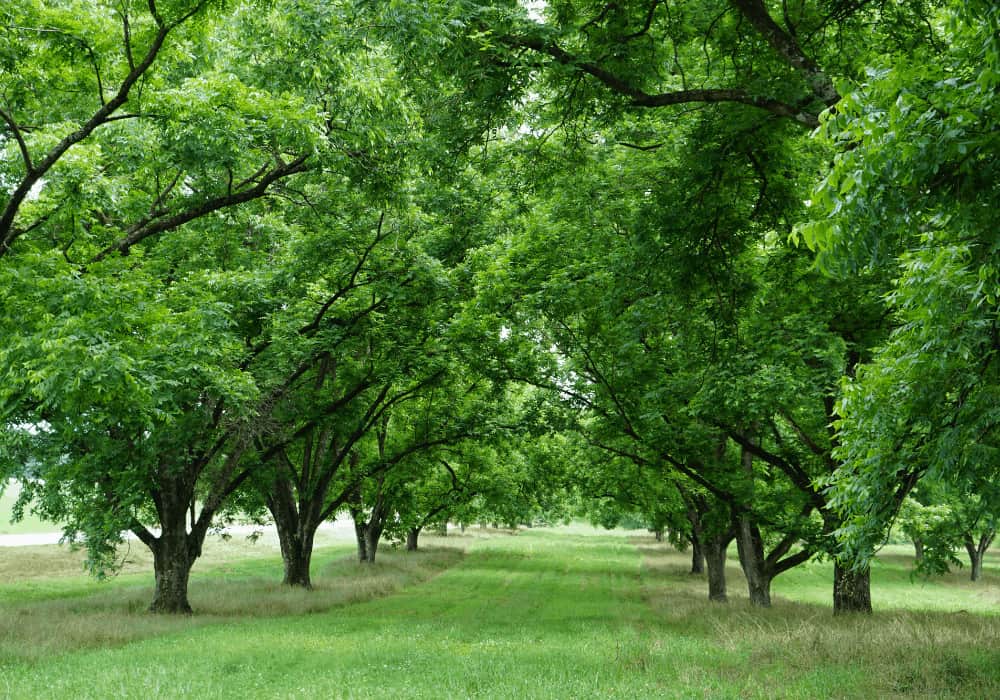
The Macadamia Nut comes from a tree in the flowering plant family Proteaceae. It takes many years to finally obtain the nut. After the seed is planted, it takes approximately 10 years to mature and produce the nuts. A fully mature tree often grows taller than 60 ft.
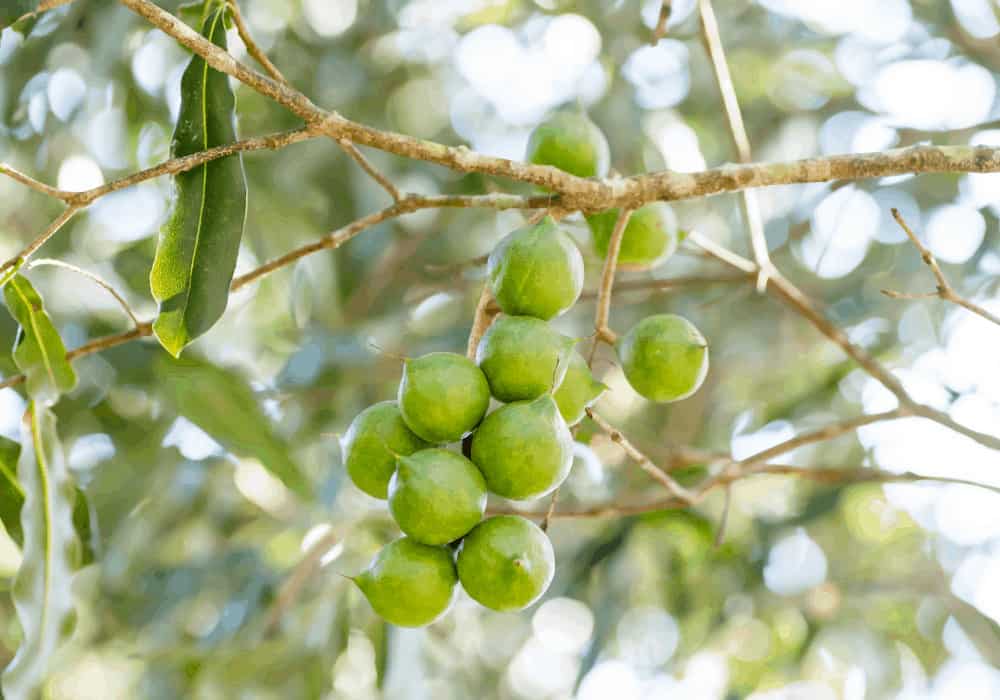
Initially, one can expect around 30-50 lbs of nuts. But as the tree matures, the number of nuts also produced increases. Some trees have been known to produce as much as 270 lbs in a year.
Three different kinds of trees give us delicious Macadamia Nuts. The Macadamia Integrifolia, Macadamia Ternifolia, and Macadamia Tetraphylla. There is also a poisonous fourth tree, the Macadamia Jansenii, which we will ignore in this case. (ALL Macadamia Nuts are poisonous to dogs, so keep that in mind next time you are snacking and one drops on the floor.)
Typically, these trees don’t produce nuts much further beyond 70 years. This is why it’s so impressive that the original tree has been producing nuts since 1857.
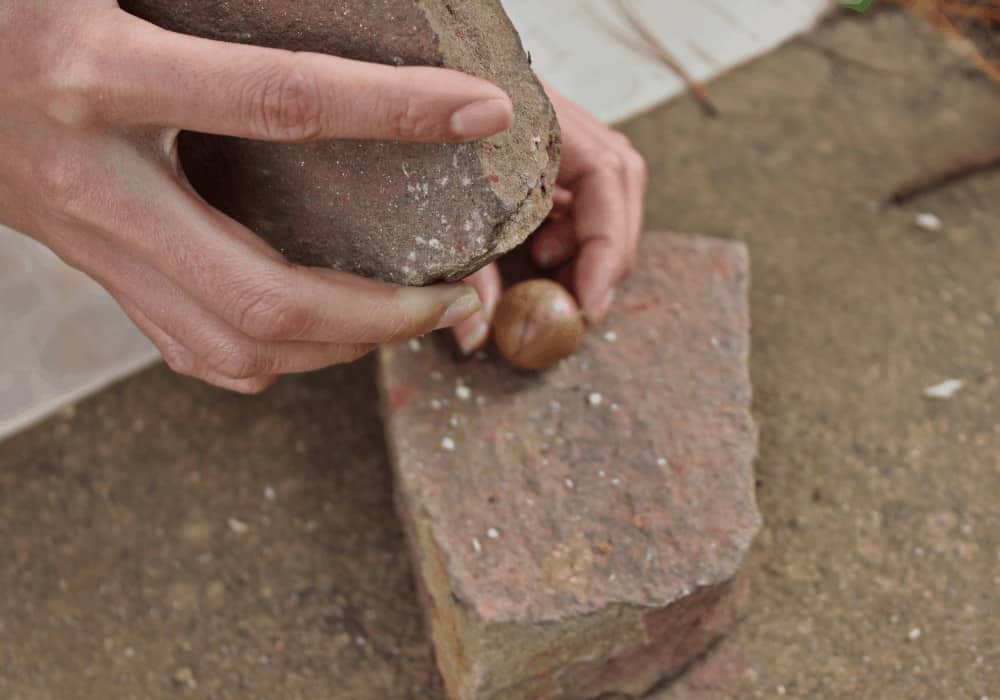
When the nuts are ripe and ready for consumption, they are not picked but fall on their own. You can also visually recognize that their readiness is approaching due to the change in color and wood-like, brown appearance. The Macadamia Nut is also quite difficult to crack compared to other nuts. The history of the Macadamia Nut involved using two large stones to break open the nut successfully.
The Largest Manufacturer
Hawaii was the original location of the first commercial crop for Macadamia Nut production. Mauna Loa Macadamia Nut Corporation, located in Hawaii, is the largest manufacturer in the world. In 1948, the plantation was founded, and the first crop was harvested in 1956.
These crops now cover over 10,000 acres and are what gave popularity to Macadamia Nuts.
In 2008, weather and other environmental factors caused a shift in Hawaii’s Macadamia Nut production. This shift allowed Australia and South Africa to take the lead in Macadamia Nut production over the United States. These countries may be the largest producers, but the United States is still number one in consumption.
Nutritional Information
Nuts are undoubtedly a healthy addition to a well-balanced diet. But did you know that Macadamia Nuts are considered the most nutritious of all nuts? The Macadamia Nut packs all the nutritional punch that other nuts do, such as protein, fiber, and healthy fats. But it’s also a powerhouse for heart health. It has more heart-healthy monounsaturated fat per serving than any other nut and only one gram of sugar per serving.
We know that balance and variety is always a good thing when it comes to dietary habits. Nuts, in general, can help us maintain a healthy weight. They can also help us feel satisfied and more energetic overall.
The Macadamia Nut – Culinary Uses
Historically speaking, many people used the Macadamia Nut in trade or as unique gifts. They were of very high value and weren’t necessarily a part of one’s daily diet.
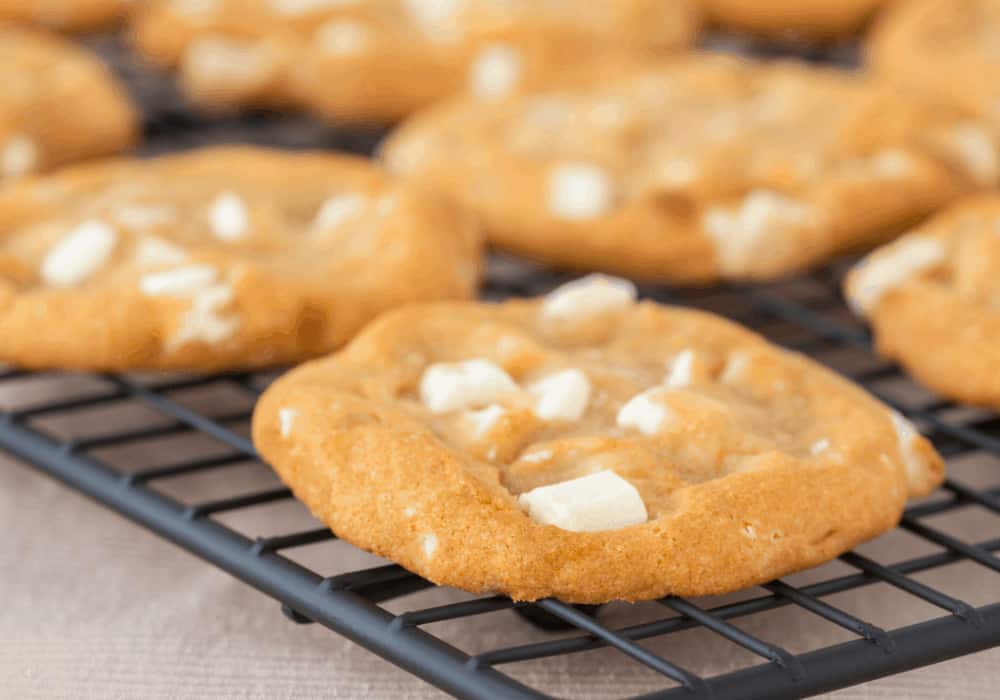
The Macadamia Nut tastes delightfully sweet, rich, and buttery. Their oil content can be up to 80% of the nut.
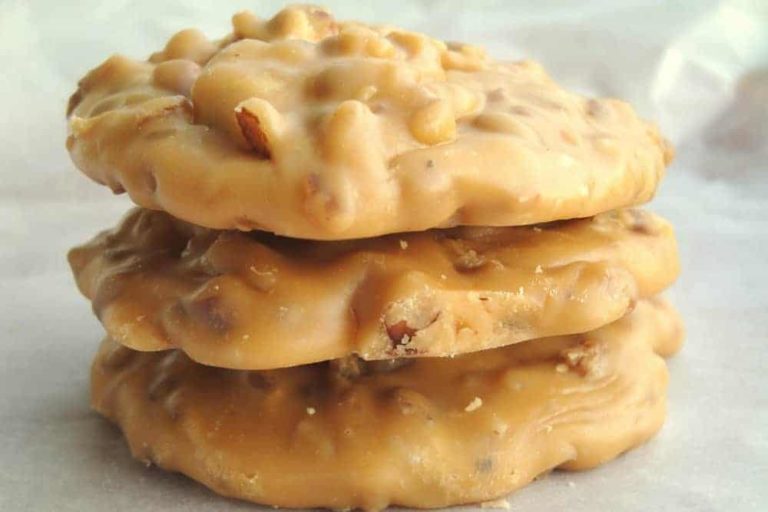
This is why it’s so commonly used in desserts such as cookies, cakes, and ice creams. Macadamia Oil comes from the kernel, which has been used for many years. Recently, however, it has gained more popularity, along with many other oil and milk nut alternatives.
The Macadamia Nut isn’t just for sweet treats. They are eaten as is but are added to cocktails, grilled as a crispy snack, or blended in hummus.
In conclusion, the Macadamia Nut has a luxurious reputation, historically speaking, and continues to today. The commonly consumed Macadamia Nut Cookie is just the beginning of the many unique ways we can enjoy them.
My deepest thanks to AB Bishop of the Bend of Islands (Victoria) in Australia. For being an excellent person and for fact-checking.